Updated August 13, 2026
If you are shopping for a travel trailer, tongue weight is one of the most important numbers to understand before you buy.
A lot of first-time buyers look at towing capacity and stop there. The truck can tow 9,000 pounds and the trailer weighs 6,000 pounds, so everything seems fine. But the trailer also pushes weight down on the back of the tow vehicle, and that tongue weight uses up payload.
In many real-world setups, payload becomes the limiting number before towing capacity does. That is why I would never choose a travel trailer based on towing capacity alone.
What Is Travel Trailer Tongue Weight?
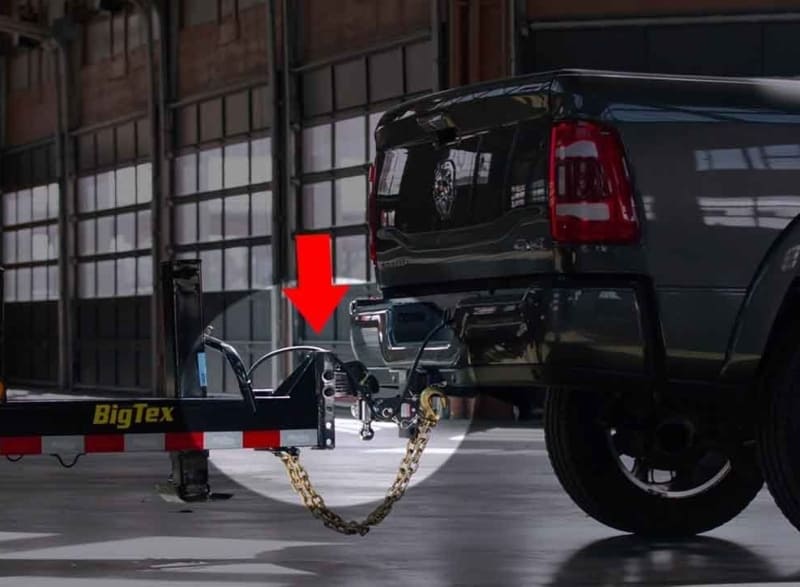
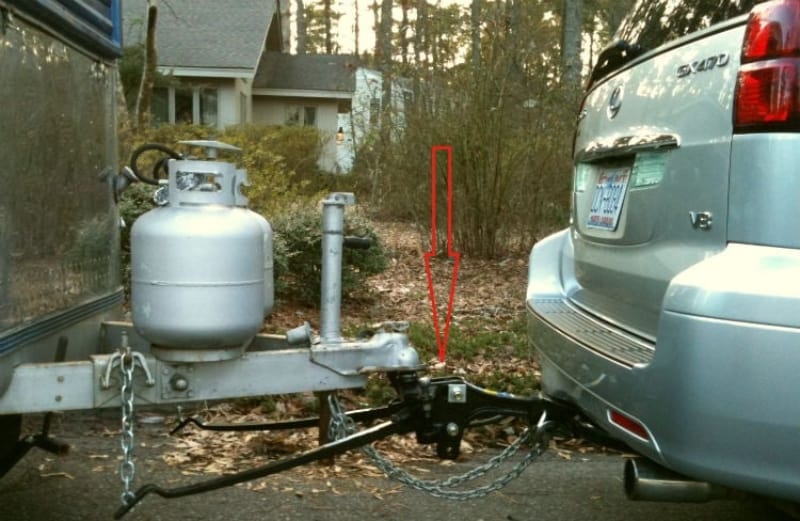
Tongue weight is the downward force the loaded trailer puts on the hitch ball of the tow vehicle.
For a conventional travel trailer, a common target is roughly 10% to 15% of the trailer’s actual loaded weight. Always follow the specific limits for your trailer, hitch, and tow vehicle.
If a trailer weighs 6,000 pounds loaded for a trip, 10% to 15% works out to about 600 to 900 pounds of tongue weight. That 600 to 900 pounds is weight the tow vehicle has to carry.
Why Tongue Weight Matters Before You Buy
A tow vehicle can have enough towing capacity and still run out of payload once you add passengers, cargo, hitch equipment, and trailer tongue weight.
For example, suppose your tow vehicle has 1,500 pounds of payload. Add 400 pounds of people, 150 pounds of cargo, 100 pounds of hitch equipment, and 900 pounds of tongue weight. You are at 1,550 pounds before the trip even starts.
The trailer could still be well below the truck’s advertised towing capacity, but the tow vehicle would already be overloaded on payload.
That is the mistake I want first-time buyers to avoid.
Do Not Rely on the Advertised Dry Hitch Weight
Manufacturers usually publish a hitch-weight or tongue-weight number in the trailer specs. It is useful for comparison, but it should not be treated as your final camping tongue weight.
Your real tongue weight changes when you add batteries, propane, food, tools, camping gear, water, and everything else you load into the trailer. Where you put that weight matters too.
For shopping purposes, I would rather estimate conservatively than discover after buying the trailer that the loaded tongue weight is much higher than the brochure number.
How I Would Estimate Tongue Weight Before Buying
If you do not own the trailer yet, you cannot load it and put it on a scale. So I would use the trailer’s GVWR as a conservative shopping estimate.
Take roughly 10% to 15% of the trailer GVWR and compare that range with the tow vehicle’s available payload and receiver-hitch ratings.
A trailer with a 7,000-pound GVWR could potentially put roughly 700 to 1,050 pounds on the hitch if loaded near its maximum weight. Your actual number may be lower, but this is a safer way to shop than assuming the published dry hitch weight will never change.
Does Tongue Weight Count Against Payload?
Yes. Once the trailer is connected, tongue load is weight being carried by the tow vehicle. Passengers, cargo, pets, aftermarket accessories, and towing equipment also use up payload.
This is why the payload sticker on the actual vehicle matters more than a generic number you find online. Two trucks that look almost identical can have very different payload ratings depending on cab style, drivetrain, trim, and options.
Does Tongue Weight Count Toward Trailer GVWR?
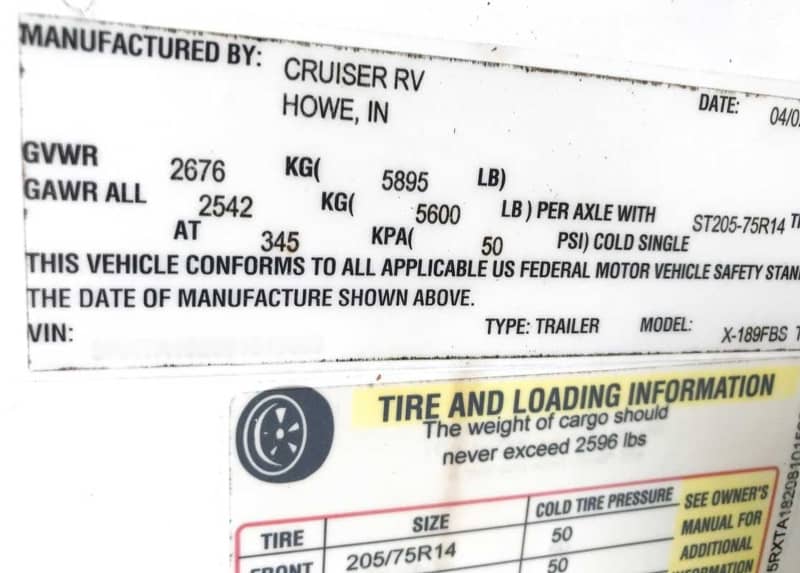
Yes. Trailer GVWR is the maximum allowable total weight of the loaded trailer, and tongue weight is part of that total trailer weight.
When the trailer is hitched, some of that total weight is carried at the hitch by the tow vehicle instead of entirely by the trailer axles. That is why trailer GVWR and tow-vehicle payload have to be considered together.
What Happens if Tongue Weight Is Too Light or Too Heavy?
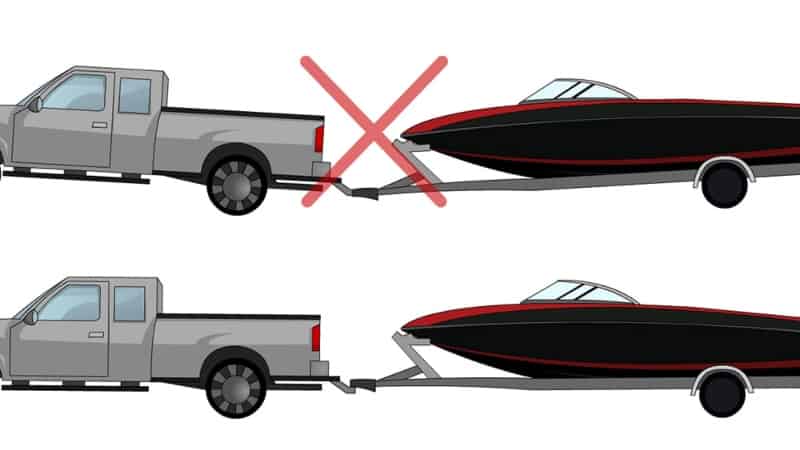
Too little tongue weight can contribute to trailer sway, especially when too much cargo is loaded behind the trailer axles.
Too much tongue weight can overload the tow vehicle’s payload, rear axle, tires, suspension, or receiver hitch. It can also make the rear of the vehicle squat and reduce weight on the front axle, which can hurt steering and braking.
The goal is not to make tongue weight as low as possible. The goal is a properly balanced trailer that stays within every manufacturer rating.
Does a Weight Distribution Hitch Increase Payload?
No. A weight distribution hitch can redistribute some load across the tow vehicle and trailer axles and improve how the combination sits and handles.
But it does not increase the tow vehicle’s GVWR, payload rating, axle ratings, or receiver limits. And the hitch hardware itself has weight, which also uses some of your available payload.
How to Measure Tongue Weight After You Buy
Once you own the trailer, stop estimating and measure it the way you actually travel, with your normal camping gear, batteries, propane, and whatever water you normally carry.
A dedicated tongue-weight scale is the simplest option for many trailer owners. A certified vehicle scale such as a CAT Scale is even more useful because it can show what is happening at the tow vehicle and trailer axles too.
I would skip the casual bathroom-scale method for most RVers unless you fully understand the leverage setup and the scale’s capacity. RV tongue weights can easily exceed what a typical household scale is designed to handle.
If you want a dedicated scale, this tongue-weight scale on Amazon is the type of tool I would use rather than guessing.
What I Would Check Before Buying the Trailer
Go to the actual tow vehicle and check the labels in the driver’s door jamb. Do not rely only on a dealer saying, “That truck can tow 10,000 pounds.”
Check the actual vehicle’s payload or occupant-and-cargo limit, GVWR, front and rear axle ratings, receiver-hitch limits, and the manufacturer’s towing guide for that exact configuration.
Then account for the people, cargo, hitch equipment, and estimated loaded tongue weight you expect to carry. If the numbers are already tight before you buy the trailer, I would choose a lighter trailer or a tow vehicle with more payload.
My Bottom Line for First-Time Buyers
Tongue weight is not something I would figure out after buying the trailer. I would use it as part of the buying decision.
Start with the tow vehicle’s real payload rating. Estimate loaded tongue weight conservatively. Add the people, gear, and hitch equipment you plan to carry. Then make sure you stay under every rating that matters.
A trailer can be under your towing capacity and still be too much trailer for your tow vehicle.
That is the one sentence I wish every first-time travel trailer buyer understood before signing the paperwork.
Related Reading
How to Reduce Tongue Weight on a Travel Trailer
Truck Towing Capacity: What Size Truck Do I Need?
About the Author:
Hi, I’m Mike Scarpignato, co-founder of TravelTrailerPro.com, RVBlogger.com, and MotorhomeFAQs.com.
My wife, Susan, and I have been creating RV content since 2018. We travel the country visiting RV shows, touring dealerships, reviewing campers, testing gear, and spending plenty of time camping in our motorhome. Most of what we share comes from actually using RVs, making mistakes, fixing problems, and learning what works in the real world.
Susan is usually behind the camera on our RVBlogger YouTube channel, which has more than 215,000 subscribers. We also run RV Camping for Newbies, a private Facebook group with more than 275,000 members, and publish four weekly RV newsletters reaching more than 85,000 subscribers.
Our goal is simple: help beginners and experienced RVers choose the right RV, avoid expensive mistakes, and enjoy the RV lifestyle with a little less frustration.