Updated October 10, 2025
When Susan and I are out touring RV shows or shooting videos for Travel Trailer Pro, one of the most common questions we hear from new owners is, “How long should my travel trailer brakes last?”
It’s a great question because trailer brakes aren’t exactly top of mind—until they stop doing their job. Like the brakes on your tow vehicle, travel trailer brakes need regular inspection and maintenance to stay in top shape.
Whether you’re hauling a lightweight single-axle camper or a large bunkhouse model, keeping your braking system in good condition is key to safety and smooth towing.
Do All Travel Trailers Have Brakes?
You might be surprised to learn that not every travel trailer comes with brakes. Most models over 3,000 pounds include electric brakes that connect to a brake controller in your tow vehicle. These systems make a huge difference when you’re towing in hilly or mountainous areas, allowing both your tow vehicle and trailer to slow down safely.
However, smaller rigs—like pop-up campers, teardrop trailers, or lightweight travel trailers—sometimes don’t have brakes at all. In many states, that’s legal if the trailer weighs below a certain limit, but requirements vary. Always check your state’s brake laws before you buy or tow.
When Susan owned her travel trailer years ago, it didn’t have factory-installed brakes, and she remembers how much more strain it put on her tow vehicle, especially on downhill grades. Adding brakes made towing much safer and more comfortable.
Can You Add Brakes to a Travel Trailer?
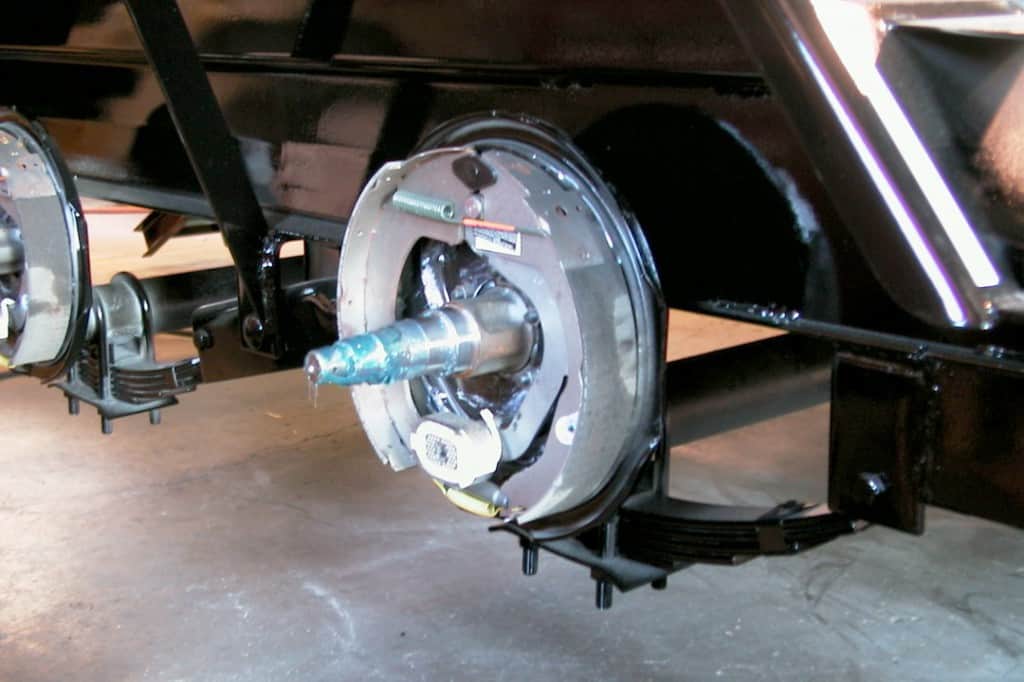
Yes, you can add brakes to a trailer that doesn’t have them. Many RVers choose to do this for added control and safety. A travel trailer brake kit is available for most axle sizes and usually costs between $200 and $400 for parts. You’ll also need a brake controller in your tow vehicle, which typically costs between $50 and $200.
Installing brakes, however, isn’t a simple DIY task. It requires wiring, axle alignment, and tools that most RVers don’t carry. Even if you’re mechanically inclined, it’s often best to have a professional do the job. Having an RV technician handle the installation ensures that your brakes engage properly when you hit the pedal, giving you confidence on the road.
Are All Trailer Brakes the Same Size?
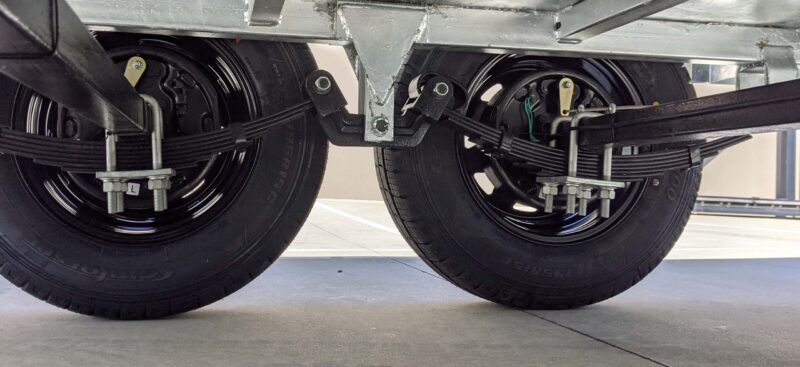
Not all trailer brakes are the same size. Brake size depends on your trailer’s axle and weight rating. Smaller travel trailers often use 10-inch brakes, while heavier rigs may require 12-inch or larger systems.
To find out what size brakes your trailer uses, check your owner’s manual for axle specifications, look for a data sticker near the tongue or entry door, or contact your dealer or manufacturer with your VIN number.
You can also measure the diameter and width of your brake drum to confirm before ordering parts. Getting this right is crucial because undersized brakes wear out faster and reduce your stopping power.
Types of Travel Trailer Brakes
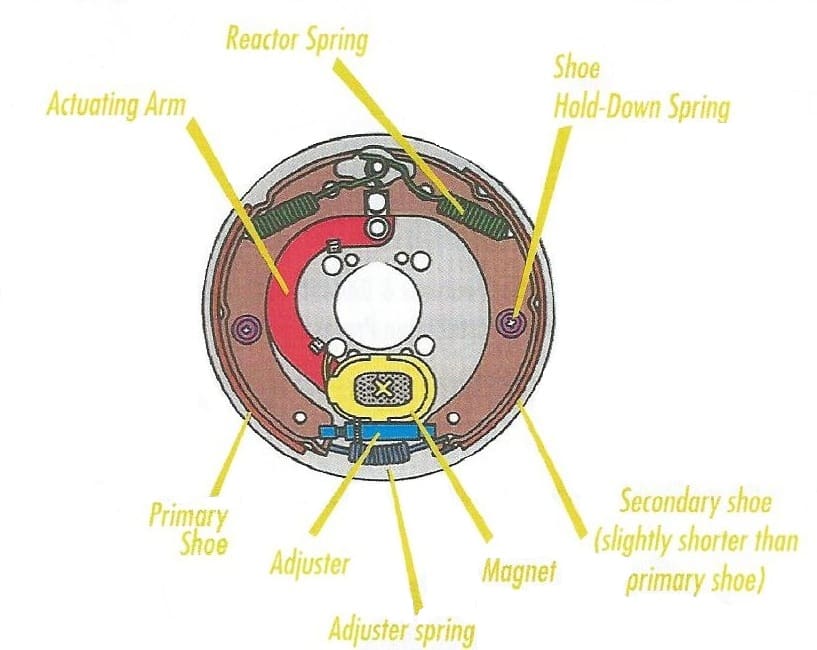
Most modern travel trailers use electric brakes, but you might also find surge brakes on smaller or older units. Here’s the difference:
Electric Brakes
Electric trailer brakes work through your 7-pin connector and a brake controller in your tow vehicle. When you press the brake pedal, the controller sends an electrical signal to magnets inside the trailer’s brake drums, engaging them in sync with your tow vehicle’s brakes.
Without a controller, electric brakes won’t function, so make sure your tow vehicle is equipped before towing.
Surge Brakes
Surge brakes use a hydraulic actuator built into the trailer’s tongue. When the tow vehicle slows, the trailer moves slightly forward, compressing the actuator and applying hydraulic pressure to the brakes.
These don’t require a controller, but they’re less common today because they offer less driver control and can be harder to maintain.
How Long Should Travel Trailer Brakes Last?
Most travel trailer brakes last around 12,000 miles, though that number can vary widely. Your towing style and environment make a big difference. Flat highway towing is easier on brakes, while mountain driving, stop-and-go traffic, or heavy loads can wear them down faster.
If you frequently travel in mountainous regions like Colorado or the Smoky Mountains, expect to replace brakes more often. The best practice is to inspect your brakes every 3,000 to 5,000 miles and replace pads or drums as soon as you notice uneven wear or reduced braking performance.
Can You Change Travel Trailer Brakes Yourself?
If you’re handy and have a safe workspace, you can change your trailer brakes yourself. Replacing pads, magnets, and drums is straightforward for most models, especially if you follow your manual and take your time.
However, if your trailer has hydraulic surge brakes, you’ll need to bleed and adjust the brake lines, which can get messy and requires precision. Many RVers prefer to let a professional handle it.
The repair typically takes two to three hours, so even if you’re on the road, you can usually have your brakes replaced and be rolling again the same day.
How Much Do Travel Trailer Brakes Cost?
Travel trailer brakes are relatively affordable compared to other maintenance costs. For trailers with axles under 5,000 pounds, parts usually run about $200, and professional installation adds another $150 to $300. Larger or dual-axle rigs cost a bit more, but not significantly.
If you’re installing a new braking system for the first time, remember to budget for a brake controller for your tow vehicle, which can cost $50 to $200 depending on the model and features.
Final Thoughts on Travel Trailer Brakes
Brakes may not be the flashiest part of your RV, but they’re one of the most important. A well-maintained braking system gives you confidence and keeps your family safe on the road.
If your trailer doesn’t have brakes, adding them is a worthwhile investment. And if it does, stay on top of regular inspections and replacements.
As Susan often says from her years of towing, “The best brakes are the ones you never have to think about—because they always work when they should.” Wise words for any RVer hitting the highway.
Related Reading:
–Are Camper Trailer Brakes Required By Law?
–5 Tips For RV Towing On Steep Grades
–10 Most Common Travel Trailer Repairs And How To Avoid Them
–How To Replace A 7-Pin Trailer Plug
About the Author:
Hi, I’m Mike Scarpignato, co-founder of TravelTrailerPro.com, RVBlogger.com, and MotorhomeFAQs.com.
My wife, Susan, and I have been creating RV content since 2018. We travel the country visiting RV shows, touring dealerships, reviewing campers, testing gear, and spending plenty of time camping in our motorhome. Most of what we share comes from actually using RVs, making mistakes, fixing problems, and learning what works in the real world.
Susan is usually behind the camera on our RVBlogger YouTube channel, which has more than 215,000 subscribers. We also run RV Camping for Newbies, a private Facebook group with more than 275,000 members, and publish four weekly RV newsletters reaching more than 85,000 subscribers.
Our goal is simple: help beginners and experienced RVers choose the right RV, avoid expensive mistakes, and enjoy the RV lifestyle with a little less frustration.