Published October 10, 2023 | Last updated August 11, 2026
Susan and I love active campgrounds. We camp with our grandkids several times a year, and I think kids should be outside, riding bikes, swimming, playing, laughing, and having a great time.
Campgrounds are supposed to be fun.
But there is a line between having fun and making everyone around you deal with your fun.
After years of RV camping around the country, these are the campground rules and unwritten etiquette rules I wish everyone would follow.
1. Do Not Cut Through Someone Else’s Campsite
This is probably my biggest campground pet peeve.
Your campsite is your temporary home. Walking through someone else’s site because it saves thirty seconds on the way to the restroom, beach, pool, or playground is no different than cutting across a stranger’s backyard.
We once camped near Ocean City, Maryland, where people constantly cut through our site and our neighbor’s site to get to the beach. Our neighbor finally became so frustrated that he surrounded his campsite with yellow caution tape.
It worked, but now everybody had to stare at yellow tape instead of the beach.
Use the road or designated path. Even if the shortcut looks harmless.
2. Slow Down — Especially in Golf Carts
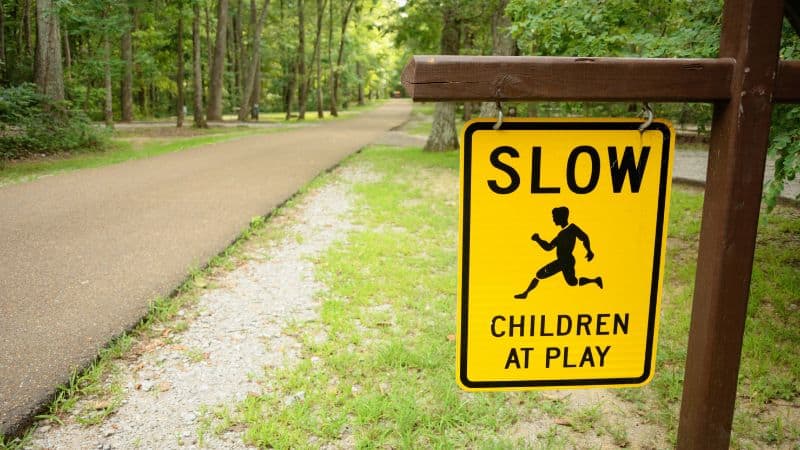
Campground speed limits are low for a reason.
Kids are riding bikes. People are walking dogs. Campers are backing into sites. Someone can step into the road from behind an RV with almost no warning.
We recently stayed at a large family campground where the posted golf-cart speed limit was 10 mph. In my opinion, plenty of private carts were moving much faster than that.
I also saw younger drivers who appeared to be below the campground’s minimum driving age.
A golf cart may feel like a toy, but in a crowded campground it can seriously hurt someone. Follow the speed limit and the age rules.
3. Keep the Music Fun Without Taking Over the Campground
I am not against music at a campground. Far from it.
We enjoy active campgrounds, pool music, cookouts, and people having fun during the day.
But your campsite or golf cart should not become a rolling nightclub that everybody else is forced to listen to.
On a recent trip, some golf carts were playing music loudly enough that everyone nearby could hear graphic sexual lyrics, profanity, and repeated racial slurs.
That is especially out of place in a campground marketed to families with young children.
Play your music. Enjoy yourself. Just keep the volume reasonable and remember that other people did not choose your playlist.
4. Quiet Hours Mean Quiet Hours
During the day, I expect a campground to have some noise.
Kids should laugh and play. People should sit around the fire. Families should enjoy themselves.
Once quiet hours begin, that changes.
Turn down the music, keep conversations reasonable, stop revving engines, and respect the people who are trying to sleep.
Generators should also follow campground hours. Even if your generator is relatively quiet, the low hum gets old quickly when it is ten feet from someone else’s bedroom.
5. Let Kids Be Kids — But Keep an Eye on Them
Susan and I camp with our grandkids several times a year, and I am absolutely not one of those campers who expects children to sit silently at the picnic table.
Kids should ride bikes, play games, swim, run around, and make memories.
We do keep an eye on our grandkids to make sure their fun is not becoming somebody else’s problem.
That means not cutting through occupied campsites, screaming next to someone’s RV early in the morning, throwing balls into neighboring sites, or riding bikes recklessly through busy roads.
There is a big difference between a lively campground and unsupervised chaos.
6. Control Your Pets and Clean Up After Them
Most pet owners we meet do a great job.
But we still see people who let dogs bark endlessly, allow them onto other campsites, or walk away from a pile of dog poop.
Not cool.
Keep your pet under control, use a leash where required, and clean up every time.
Also remember that not every camper is comfortable around dogs, no matter how friendly yours may be.
We have a separate article on how to handle barking dogs at a campground if this becomes a problem during your stay.
7. Turn Off Bright Exterior Lights at Night
Exterior lights are useful when you are outside your RV.
Leaving bright awning lights, porch lights, or perimeter lights on all night is another story.
We have camped next to people whose lights illuminated our campsite all night. We have also had neighbors with motion lights that blasted on every time Susan or I walked outside.
Ugh.
Use the light you need while you are outside, then turn it off. Your neighbor may be trying to sleep or enjoy a dark sky.
For more on this, see our article about leaving RV exterior lights on overnight.
8. Completely Extinguish Campfires

Never leave a campfire unattended, and make sure it is completely out before going to bed or leaving the campground.
When we used wood fires more often, Susan and I would place a bucket under the RV to catch condensation dripping from the air conditioner. We could then use that water to help douse the fire at night.
We use a propane fire pit more often now, but the basic rule is the same: fire safety is everybody’s responsibility.
9. Do Not Burn Trash
Your fire ring is not a garbage disposal.
Plastic, cans, food packaging, diapers, and other trash can smell awful and may release harmful substances when burned.
Use the campground dumpster or take your trash with you.
10. Buy Firewood Locally
Moving firewood can spread invasive insects and tree diseases from one area to another.
We have driven through parts of the country where invasive pests have devastated huge sections of forest. Seeing the damage in person makes this rule much easier to appreciate.
Buy firewood near the campground or follow the park’s approved-firewood rules.
We explain why this matters in more detail in our article Why You Should Avoid Moving Firewood.
11. Keep Your Site Clean and Food Secured
A messy campsite is more than an eyesore.
Food scraps, garbage, dirty grills, and pet food can attract raccoons, bears, rodents, and other wildlife.
Follow the campground’s food-storage rules and clean up after meals.
My dad taught my brothers and me to leave a campsite better than we found it. I still think that is one of the best camping rules there is.
12. Respect Wildlife and the Landscape
Do not feed wildlife, chase animals for photos, cut branches, carve trees, or move natural features around your site just because they are inconvenient.
We are guests in these places.
Leave plants, trees, and wildlife alone so the next camper can enjoy the same campsite.
13. Park Without Blocking Roads or Neighboring Sites
Keep tow vehicles, golf carts, bikes, and extra cars inside your assigned parking area whenever possible.
Do not block campground roads, empty sites, access to neighboring hookups, or space needed for someone to back an RV into a site.
Besides being inconsiderate, blocking a road can interfere with emergency vehicles.
14. Use Only the Hookups Assigned to Your Site
Some campground utility pedestals and water connections sit close together, especially in older parks.
Make sure you are using the electrical, water, and sewer connections assigned to your site.
If the layout is confusing, ask campground staff instead of plugging into what looks convenient.
15. Dump RV Tanks Only Where Allowed
Black water belongs in a sewer connection or approved dump station.
Gray-water rules vary by location, so never assume it is okay to dump gray water onto the ground.
We have seen evidence of tanks being dumped improperly on public lands. Abuse like that is exactly how camping areas end up restricted or closed.
We cover the issue in detail in Is It Legal to Dump RV Gray Water on the Ground?
16. Give New Arrivals Room to Set Up
Backing an RV into a campsite is stressful enough without an audience standing three feet away.
When new neighbors arrive, give them space.
If they clearly need help, ask before jumping in. Some people appreciate a spotter. Others already have a system with their spouse and another person shouting directions just makes things worse.
A friendly wave and “Let me know if you need a hand” works just fine.
17. Respect Shared Facilities and Campground Staff
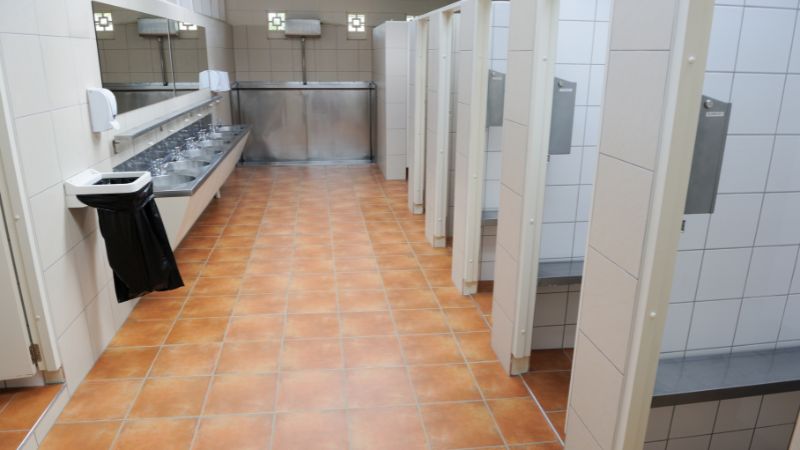
Clean up after yourself in bathrooms, showers, laundry rooms, pools, kitchens, and recreation areas.
Do not monopolize washers, dryers, showers, or pool chairs when other campers are waiting.
And give campground employees some grace.
We have met some fantastic campground employees over the years. They are often juggling check-ins, maintenance problems, angry guests, weather issues, and everything else that happens in a busy park.
If something needs to be fixed, be clear and firm if necessary, but there is rarely a reason to treat the staff badly.
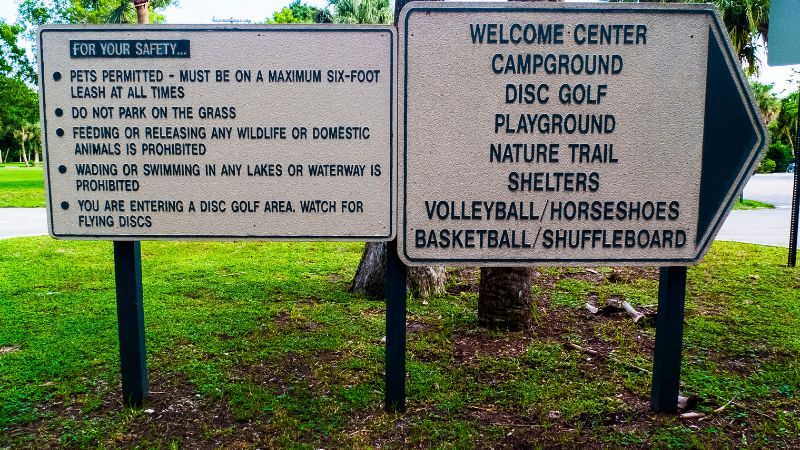
18. Read the Campground’s Rules When You Arrive
This sounds obvious, but every campground is different.
Check the rules for:
- Quiet hours
- Golf-cart operation
- Pet requirements
- Generator hours
- Campfires
- Parking
- Visitors
- Trash
- Pool and recreation areas
Even experienced campers can get caught by a rule that is different from the campground they stayed at last week.
How Should You Deal With a Camper Who Breaks the Rules?
This depends on the problem.
If something minor happens and the person seems approachable, a friendly comment can sometimes solve it.
If I see someone walk away without cleaning up after a dog, for example, I may politely point it out.
But I would not confront someone over aggressive behavior, intoxication, reckless driving, or anything that feels unsafe.
In those situations, campground management should handle it. They know the rules, have the authority to enforce them, and can decide whether a warning or removal is appropriate.
Susan and I generally assume most people are not trying to be jerks. A lot of campground problems come from people who simply do not realize how their behavior is affecting everyone around them.
A polite reminder can go a long way. But you do not need to become the campground police either.
My Bottom Line
I do not want campgrounds to become libraries.
I want kids playing, families cooking outside, people sitting around campfires, golf carts cruising around, and everybody enjoying themselves.
Just remember that everybody else paid for their campsite too.
The simplest campground rule is this: have as much fun as you want without making your fun somebody else’s problem.
Related Reading
- How to Handle Barking Dogs at a Campground
- Should You Leave Your Exterior RV Lights on All Night?
- Is It Legal to Dump RV Gray Water on the Ground?
- Why You Should Avoid Moving Firewood
About the Author:
Hi, I’m Mike Scarpignato, co-founder of TravelTrailerPro.com, RVBlogger.com, and MotorhomeFAQs.com.
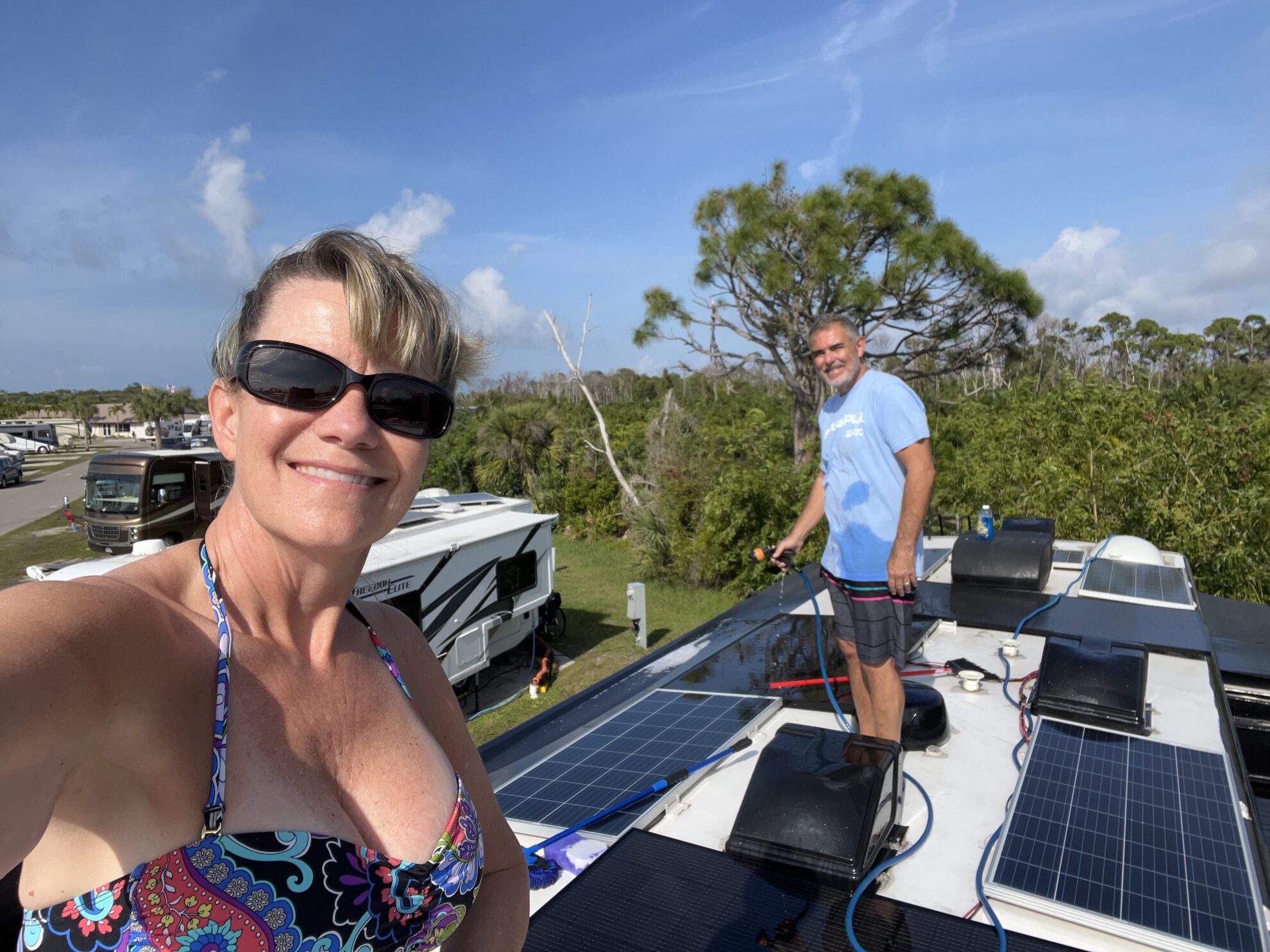
My wife, Susan, and I have been creating RV content since 2018. We travel the country visiting RV shows, touring dealerships, reviewing campers, testing gear, and spending plenty of time camping in our motorhome. Most of what we share comes from actually using RVs, making mistakes, fixing problems, and learning what works in the real world.
Susan is usually behind the camera on our RVBlogger YouTube channel, which has more than 215,000 subscribers. We also run RV Camping for Newbies, a private Facebook group with more than 275,000 members, and publish four weekly RV newsletters reaching more than 85,000 subscribers.
Our goal is simple: help beginners and experienced RVers choose the right RV, avoid expensive mistakes, and enjoy the RV lifestyle with a little less frustration.