I’ll never forget one of our first trips of the season where everything went sideways… and honestly, it was all my fault.
The A/C barely pushed out air because I never cleaned it.
The black tank smelled so bad we couldn’t even sit outside.
The slide-outs sounded like they were about to break.
The steps were slow and squeaking like crazy.
And to top it off… the fridge smelled like mildew.
All of it? Preventable.
That’s the thing about spring RV trips — this is where most people run into problems they could have avoided in their driveway.
After 7+ years of RVing, this is exactly what I do before every first trip of the season. Not a generic checklist… this is the real-world version based on mistakes I’ve already made so you don’t have to.
Start Outside First (Most People Skip This)
Before I touch anything inside, I grab a ladder and head straight to the roof.
This is where a lot of RVers mess up.
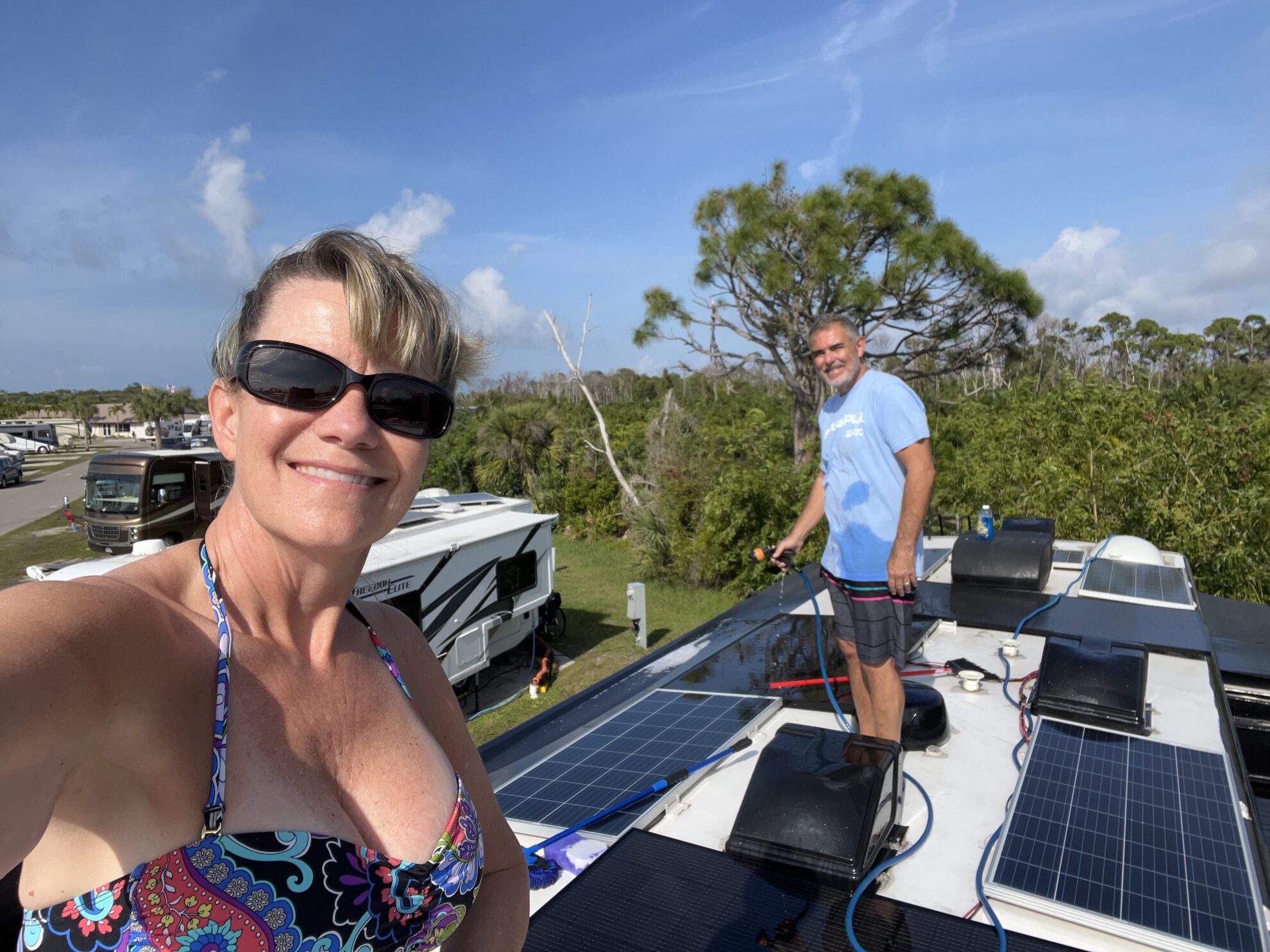
I check every inch of the roof — seals, vents, skylights, A/C unit — looking for cracks, gaps, or anything that looks off. I like to use Dicor sealants to seal any cracks or gaps I find. But I clean the roof before applying the sealant or it won’t stick properly.
Then I clean the roof. I like to use the 303 products on my roof.
This is one I used to skip… and I paid for it.
After one rainstorm, black streaks ran down the entire side of our RV. It looked terrible.
We keep a bottle of black streak remover on board but it’s easier just to wash the roof once in a while.
While I’m up there, I also:
- Check all sealant around vents and seams
- Look for soft spots
- Reseal anything questionable
Clean and Check the A/C Unit
If you camp anywhere warm, this one matters more than almost anything else.
One of our first trips, the A/C was running… but barely any air was coming out.
Now I never skip this.
First:
- Remove and rinse filters
- Let them dry completely
Then clean the unit and coils if needed. I like to use Nu-Calgon Evap Foam (no-rinse). It is widely considered the best overall RV A/C coil cleaner, and you don’t have to rinse it off, which is the key for RV AC units.
Here’s a video from our good friend Todd from the NRVTA about how to clean your RV A/C Unit.
If you really want to take great care of your rig, you should learn how all of the components work. I found that the NRVTA Home Study Course is the best way to learn. And you can save 40% off with our discount code RVBlogger. You really should learn this stuff; it will save you a lot of headaches and money.
Slides, Steps, and Moving Parts (This Gets Overlooked A LOT)
I extend every slide and listen.
If I hear anything off… it gets attention.
I clean the tracks and use lubricant.
3 in 1 sells a three pack of lubricants that I highly recommend. One is for rubber seals, one for slide outs and one for window openings.
I also:
- Lube steps
- Check hinges
- Clean and lube levelers
These are small things that make a big difference.
Water System + De-Winterizing
Flush antifreeze, run all faucets, and check for leaks.
Then sanitize the system.
We actually created a full step-by-step guide on how to de-winterize your RV on RVBlogger.com — worth reading if you haven’t done it before.
Tank Cleaning (Don’t Skip This… Seriously)
This is where people get burned.
I dump, flush, and clean thoroughly.
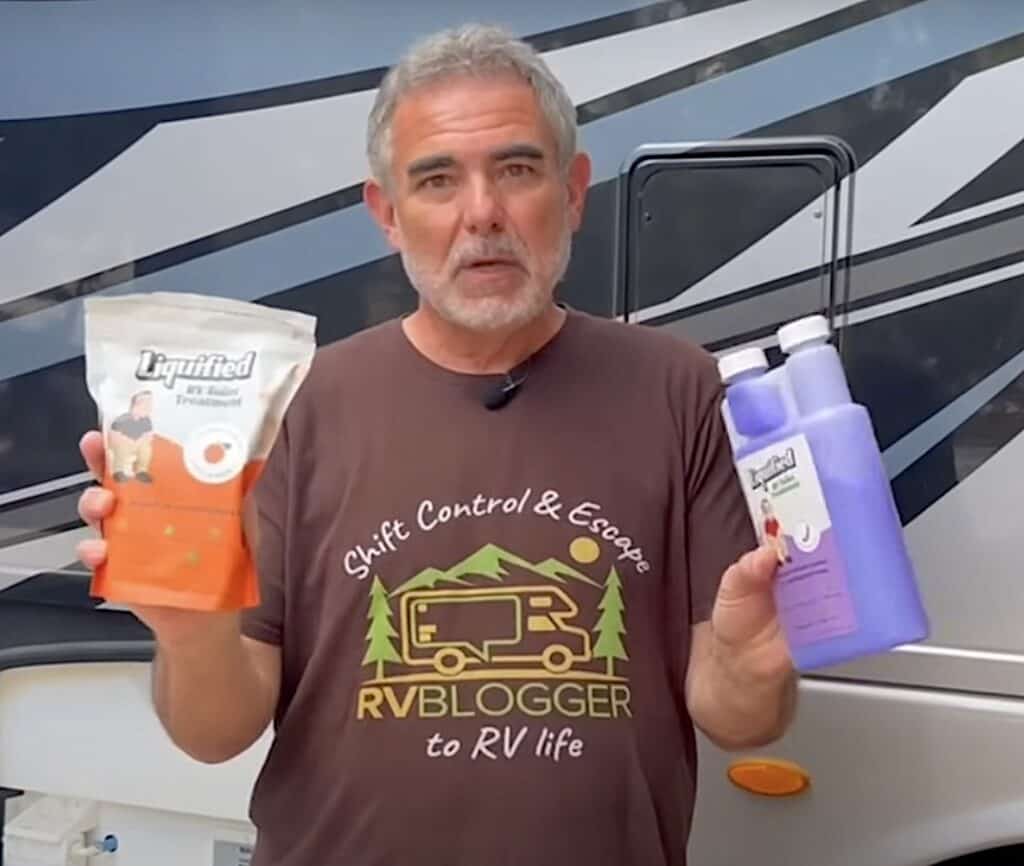
Then I always add treatment.
If you want to go deeper on this, check out our full guide to cleaning and maintaining your RV black tank on RVBlogger.
Water Filters (People ALWAYS Forget This )
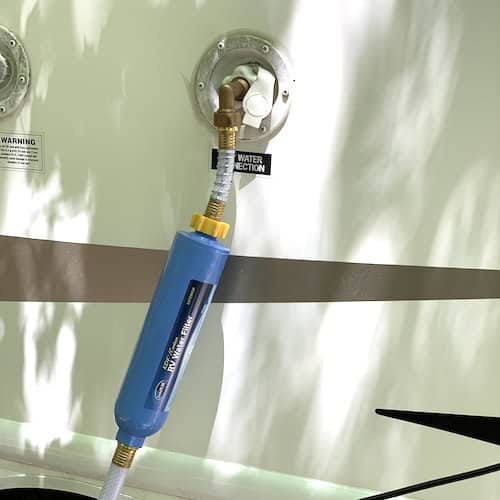
I’ve forgotten this more than once.
Now I always replace both my water filter outside the RV and the water filter inside my fridge (most travel trailers don’t have a filter in the fridge but some 5th wheels do)! We always seem to forget one or the other…
Clean water matters more than you think — especially if you’re traveling a lot.
Electrical System Check
Check batteries, connections, and shore power.
Test everything before you leave.
By the way, if you don’t already have a surge protectore, this is one upgrade I highly recommend. I use Progressive Industries 30 Amp Surge Protector on my Class C RV (also works for most travel trailers) and their 50 Amp Surge Protector on my Class A RV ( also for most 5th wheels)
Tires, Brakes, and Safety
This is all about avoiding problems on the road.
Check:
- Tire pressure
- Sidewalls
- Lug nuts
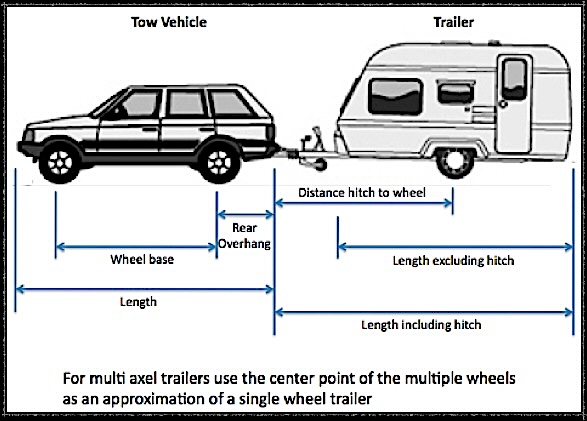
If you’re unsure about towing limits or setup, we break that down in detail on TravelTrailerPro.
Final Thoughts (Do This Now or Pay for It Later)
None of this is complicated.
But skipping it?
That’s where problems start.
About the Author:
Hi, I’m Mike Scarpignato, co-founder of TravelTrailerPro.com, RVBlogger.com, and MotorhomeFAQs.com.
My wife, Susan, and I have been creating RV content since 2018. We travel the country visiting RV shows, touring dealerships, reviewing campers, testing gear, and spending plenty of time camping in our motorhome. Most of what we share comes from actually using RVs, making mistakes, fixing problems, and learning what works in the real world.
Susan is usually behind the camera on our RVBlogger YouTube channel, which has more than 215,000 subscribers. We also run RV Camping for Newbies, a private Facebook group with more than 275,000 members, and publish four weekly RV newsletters reaching more than 85,000 subscribers.
Our goal is simple: help beginners and experienced RVers choose the right RV, avoid expensive mistakes, and enjoy the RV lifestyle with a little less frustration.